
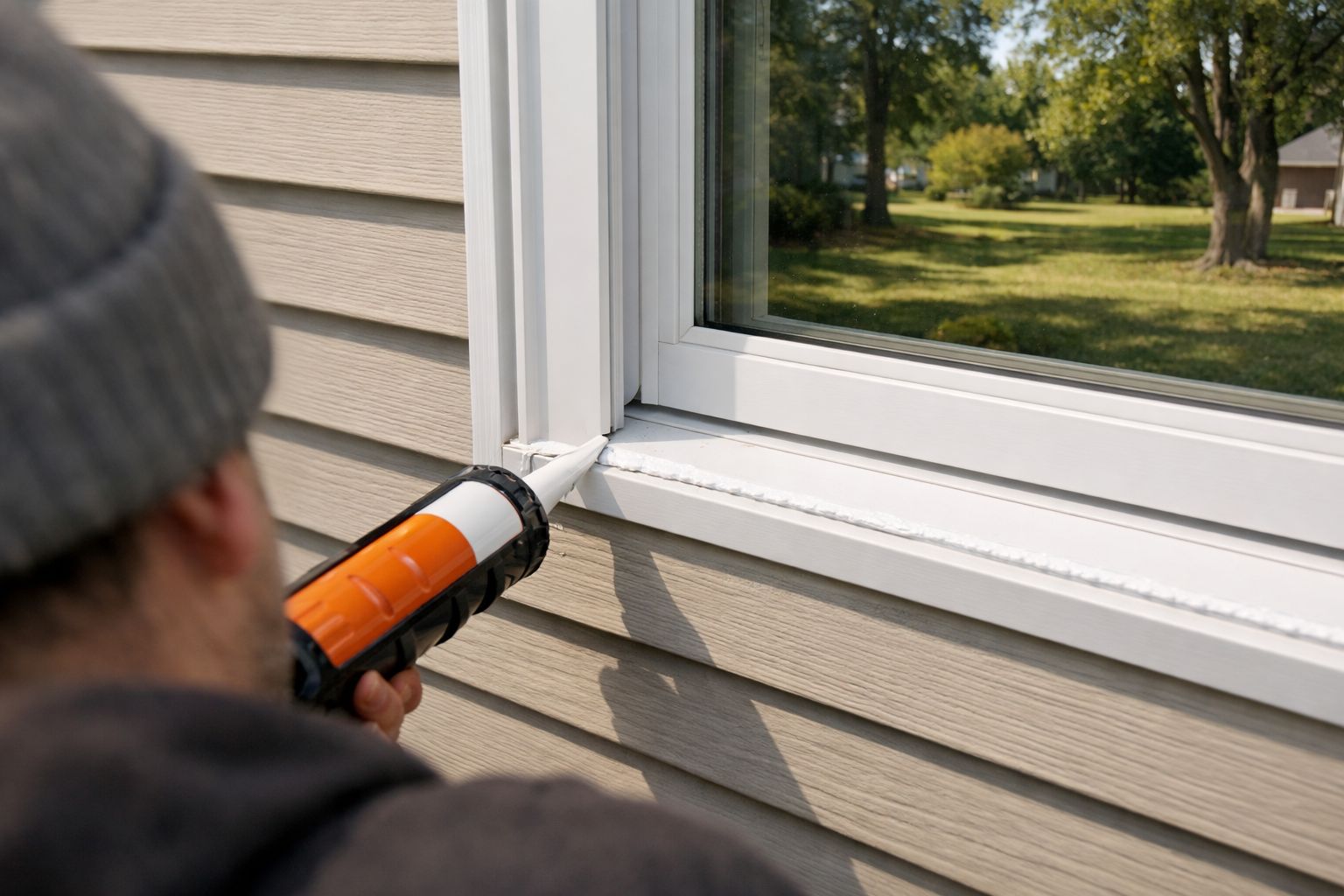
Window replacement in Portage, IN, built for lakefront exposure
Window replacement in Portage means pulling your existing units back to the rough opening, correcting the flashing and sealant details around that opening, and installing new windows rated for the air infiltration and wind load that come with living this close to Lake Michigan. Because Portage homes sit in open lakefront exposure with little to break the wind, how the opening is sealed matters as much as which window goes into it. Most whole-home projects run several weeks from measurement to installation, with the window installation itself typically finishing in one to two days.
Areas We Serve in Portage
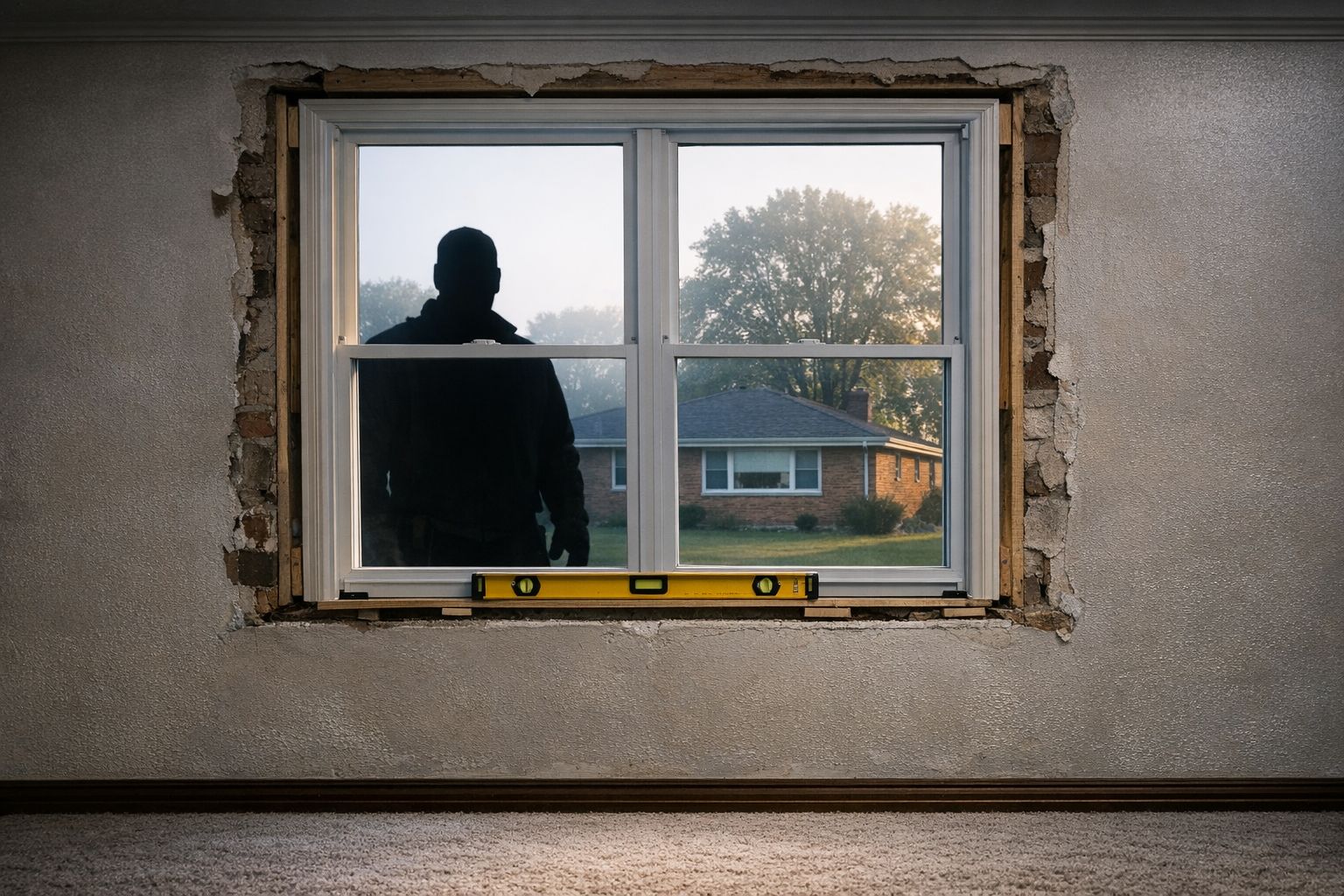
A new unit set, shimmed, and leveled in the opening — serving Portage and surrounding areas
Window Replacement Services in Portage
Whole-Home Window Replacement
Every opening measured and replaced as a single project, room by room.
Window Installation
New units set, shimmed, insulated, and sealed one opening at a time.
Double-Hung Windows
Two operating sashes, tilt-in cleaning, and steady ventilation control.
Casement Windows
Side-hinged sash that cranks outward so the full opening clears.
Energy-Efficient Glass Packages
Low-E coatings and argon fills matched to each wall's exposure.
Free In-Home Estimates
An opening-by-opening walkthrough and a written scope, no obligation.
Window Solutions for the Northwest Indiana Climate
Northwest Indiana asks a lot of a window. Long cold stretches arrive with wind coming off Lake Michigan, summers turn humid enough that the difference across the glass shows up as condensation, and the shoulder seasons swing above and below freezing over and over. That repeated freeze-thaw cycling is what works at seals, caulk joints, and the moving parts of a sash, which is why Portage homeowners tend to feel drafts and find fogged glass in the same rooms season after season. Units for Portage homes are chosen with that cycle in mind.
Glass packages get matched to the wall they sit on — Low-E coatings to slow radiant heat transfer, multi-pane construction with argon fills between the panes, and warm-edge spacers at the glass edge where condensation tends to start. The point is a window that holds its seal through the cycling, not one that only reads well on a spec sheet.
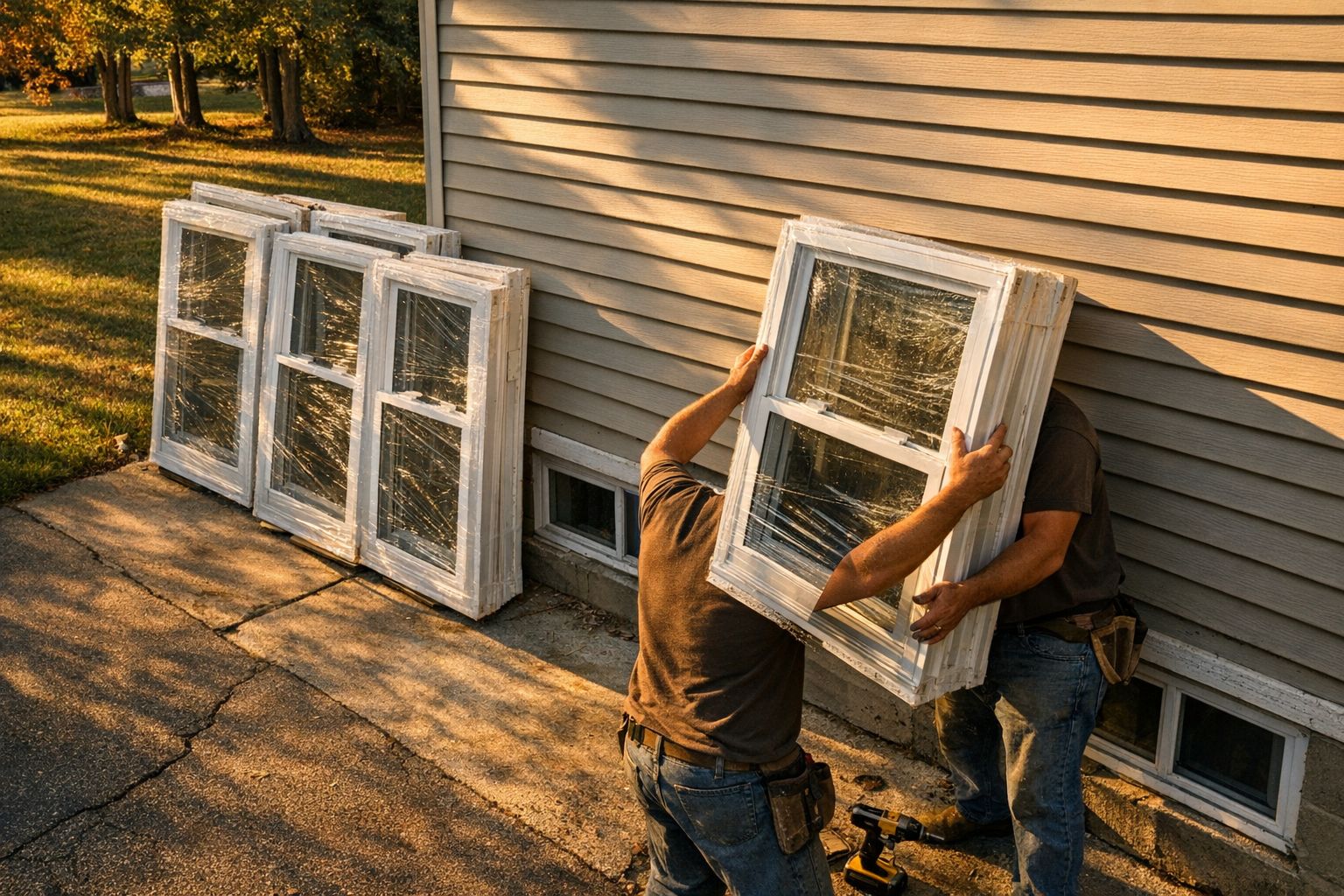
Window Replacement in Portage, IN
Portage sits directly on the water at the western edge of the Indiana Dunes, and there is very little between your walls and the lake to slow anything down. Wind arrives off Lake Michigan at close to full strength, pushing rain sideways, packing lake-effect snow into every seam, and carrying fine dune sand along with it.
Homes out near the Portage Lakefront and Riverwalk, or over toward Ogden Dunes, catch the worst of it. But that pressure reaches well inland, across Salt Creek and the Little Calumet River and into the older subdivisions south of the South Shore Line tracks.
This is why a window that performs beautifully in a sheltered spot can leak, whistle, or fog on a Portage elevation. Same window, completely different load on it.
Ask a homeowner here which windows are the worst and most will point the same direction. North- and west-facing elevations take the prevailing wind straight off the lake, so they absorb far more wind-driven water, more freeze-thaw movement, and more airborne grit than the sheltered sides do.
What you tend to notice on the exposed side: drafts you can feel from several feet away when the wind is up; staining on the sill or the drywall below it, but only after storms with wind behind them; sashes that rattle or flex noticeably under gusts; failed seals and fogged glass appearing on one elevation years before the rest of the house; and weatherstripping that is flattened, torn, or packed solid with dirt.
Most water that gets into a Portage home around a window is not the window failing. It is the assembly around it. Wind-driven rain does not fall down; it gets pushed horizontally and even upward, so it finds the top corners of the opening, the joint where the sill meets the frame, and any spot where the original installer trusted a bead of caulk to do structural work.
Getting it right on a lakefront elevation means flashing and a sloped sill pan that give any water that does get in a path back out; backer rod and properly tooled sealant joints instead of surface caulk alone; frames and glass chosen with air infiltration ratings and wind load in mind, not just glass package; and full-perimeter insulation behind the trim with a continuous interior air seal.
Dune sand and grit off the beach work their way into sliding tracks and sit there, abrading the metal and chewing through weatherstripping until the sash no longer compresses against anything. It is a slow failure that reads as a draft. Choosing hardware and track designs that shed debris, plus rinsing tracks out periodically, extends the life of exposed windows considerably.
A lot of Portage housing stock is 1960s through 1980s subdivision construction inland from the lakefront — full basements, brick and vinyl siding, asphalt shingle roofs, and original double-hung vinyl windows now well past their useful life under maple and oak shade. We also work on newer builds toward Burns Harbor and the Port of Indiana, where exposure is wide open.
Either way, the assessment starts in the same place: which elevations are taking the hit, and which replacement windows suit that exposure.
We are based in Gary and cover Portage and the surrounding Porter County communities. A visit lets us look at each elevation, measure the openings properly, and tell you honestly which windows need replacing now and which can wait.
About Portage
Portage is a Porter County city sitting directly on Lake Michigan at the western edge of the Indiana Dunes, with the Portage Lakefront and Riverwalk on the water and Ogden Dunes just to the west. Salt Creek and the Little Calumet River cross the city, the South Shore Line tracks separate the older subdivisions from newer ones, and Burns Harbor and the Port of Indiana sit on wide-open shoreline nearby. Much of the housing stock is 1960s through 1980s subdivision construction inland from the lakefront: full basements, brick and vinyl siding, asphalt shingle roofs, and original double-hung vinyl units aging under maple and oak shade. With very little between a wall and the water, wind-driven rain, lake-effect snow, and blowing dune sand set what a window here has to survive — and they hit the north and west elevations hardest.
Window Replacement Cost in Portage
Two things drive a Portage window estimate: how much of the house you are doing, and how exposed the walls are. Opening count is the first factor, and many projects here start as a single elevation — usually the north or west face taking wind straight off the lake — rather than the whole house. Size matters next, since larger units and wider spans need more glass and more reinforcement to carry wind load. Then comes specification: frames and glass chosen for air infiltration and design-pressure performance on an exposed elevation sit above a unit picked on glass package alone, and hardware with multiple compression points, solid locks, and tracks designed to shed dune sand adds to a unit as well. The other half of the cost is the opening itself. Correcting flashing, installing a sloped sill pan, using backer rod and properly tooled sealant instead of surface caulk, and insulating the full perimeter behind the trim are labor, not product — and if water has already been tracking in at the top corners or the sill, replacing rotted framing turns an insert into full-frame work. Cold-weather installation is routine here, though cold-weather-rated sealants and dry, frost-free substrates are part of that scope. Access is usually simple on subdivision lots inland and more involved on tall or wide lakefront elevations.
Frequently Asked Questions — Portage
What window features matter most for a home exposed to Lake Michigan wind?
Air infiltration rating is the number to look at first — it tells you how much air moves through the assembly under pressure, which is exactly what a Portage lakefront elevation puts on a window constantly. After that, look at the design pressure or wind load rating, because gusts coming across open water flex a sash and can break the seal between it and the frame. Multiple compression points on the weatherstripping and solid locking hardware help, since a sash that pulls away under pressure will leak air and water no matter how good the glass is. Glass package still matters for comfort and condensation, but on an exposed elevation it is the sealing and structural side that determines whether the window holds up.
Can windows be installed during cold weather?
Yes, window installation is done in cold weather routinely in Northwest Indiana — it is standard practice, not an exception. The work is staged one opening at a time so your house is never broadly open, and the room being worked in is isolated so heat loss stays limited to that space. The real constraint is materials: sealants and foams have minimum application temperatures, so a cold-weather-rated sealant has to be used and substrates need to be dry and frost-free when it goes on. Adhesion is where cold installs go wrong, so that detail matters more than the air temperature itself.
Why do windows on one side of a house fail before the others?
Because the sides of your house are not experiencing the same weather at all. In Portage the north and west elevations face the prevailing wind coming off Lake Michigan, so they take repeated wind-driven rain, more snow packed into the joints, and harder freeze-thaw cycling than the south and east sides. Every one of those cycles works the sealant joints and the seal around the insulated glass a little looser. That is why it is common to find one elevation with fogged glass and obvious drafts while windows of the exact same age elsewhere on the house are still fine.
Does blowing sand damage window tracks and weatherstripping, and can that be prevented?
It does, and it is a genuine issue for homes near the dunes and the lakefront. Fine sand blown off the beach settles into sliding tracks and sill channels, then acts as an abrasive every time the sash moves, wearing down the weatherstripping until it no longer seals and scoring the track surface. You can slow it down a lot: rinse and vacuum tracks out a few times a year, keep weep holes clear so grit washes out rather than collecting, and choose windows whose tracks are designed to shed debris instead of collecting it. Replacing worn weatherstripping when you notice a draft, rather than waiting, also keeps a small maintenance item from turning into a water problem.
What causes water to get in around a window even when the window itself is fine?
Almost always a failure in the assembly around the opening rather than the window unit. If there is no sill pan or flashing under the window, water that gets past the exterior surface has nowhere to drain and instead soaks the framing and shows up on your interior sill. Wind-driven rain off the lake makes this worse because it is pushed sideways and upward into the top corners of the opening, where surface caulk alone almost never holds long term. That is why replacing a leaking window without correcting the flashing and sealant details usually produces a new window that leaks in the same place.
Ready for New Windows in Portage?
Free in-home estimates · No obligation · No pressure
📞 Call (219) 200-4360Free Estimate in Portage
No obligation · No pressure
Takes 60 seconds · No obligation
📞 Or call: (219) 200-4360Set, shimmed, and checked for level
Nearby Service Areas
Serving Portage & Surrounding Areas
- Free In-Home Estimates
- No-Obligation Written Quote
- Opening-by-Opening Assessment
- Custom-Measured Units
- Manufacturer Warranty Coverage
- Locally Operated