
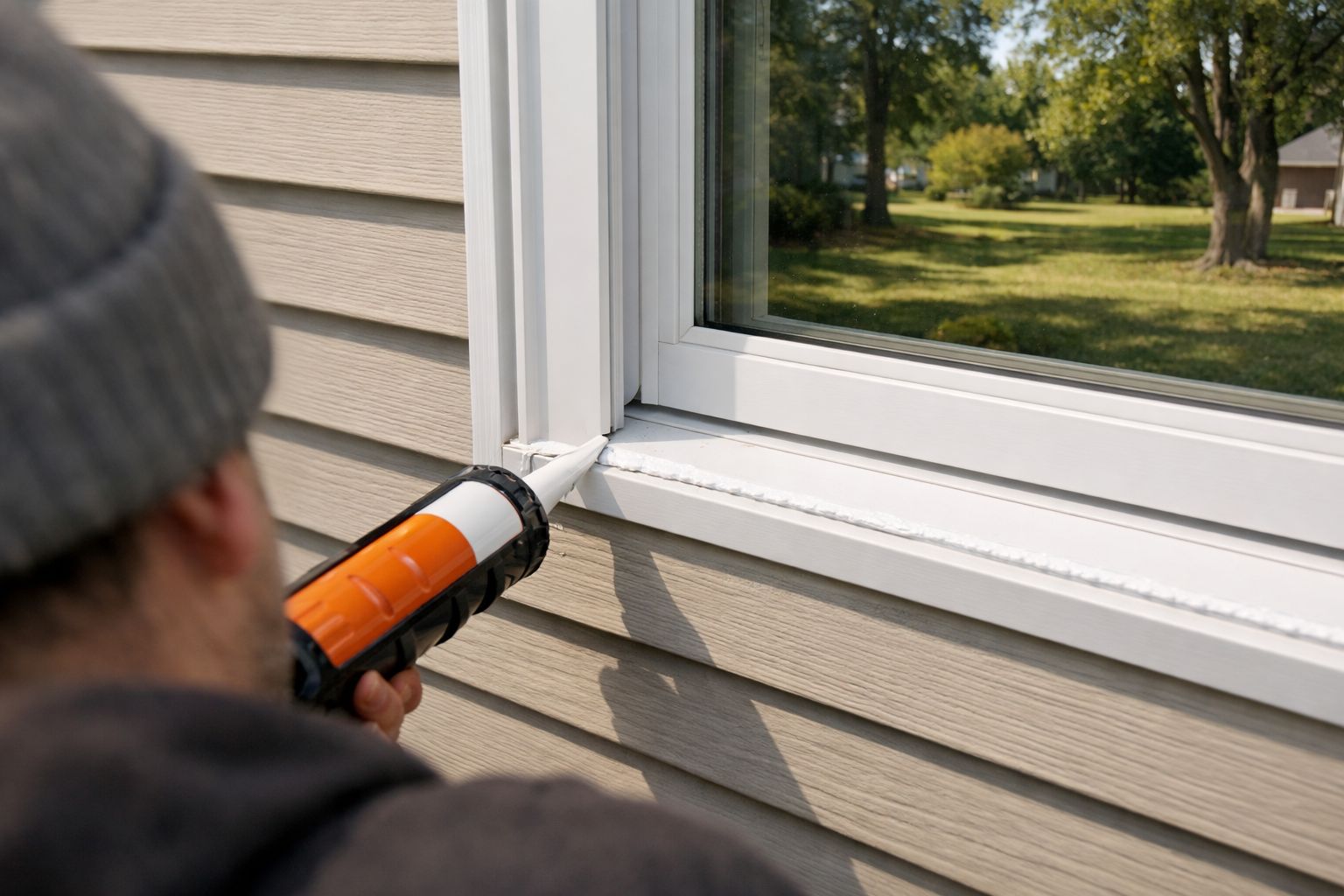
Window replacement in Hobart, IN for homes fighting condensation
Window replacement in Hobart means removing your existing units, correcting the opening, and installing insulated windows that hold a warmer interior glass surface — which is what reduces the water beading on your glass and sills. In a town built around Lake George, where the older streets nearest the water sit in persistently humid air over full basements, condensation is what usually starts homeowners looking at new windows. Expect a few weeks from measurement to install, and one to two days on site.
Areas We Serve in Hobart
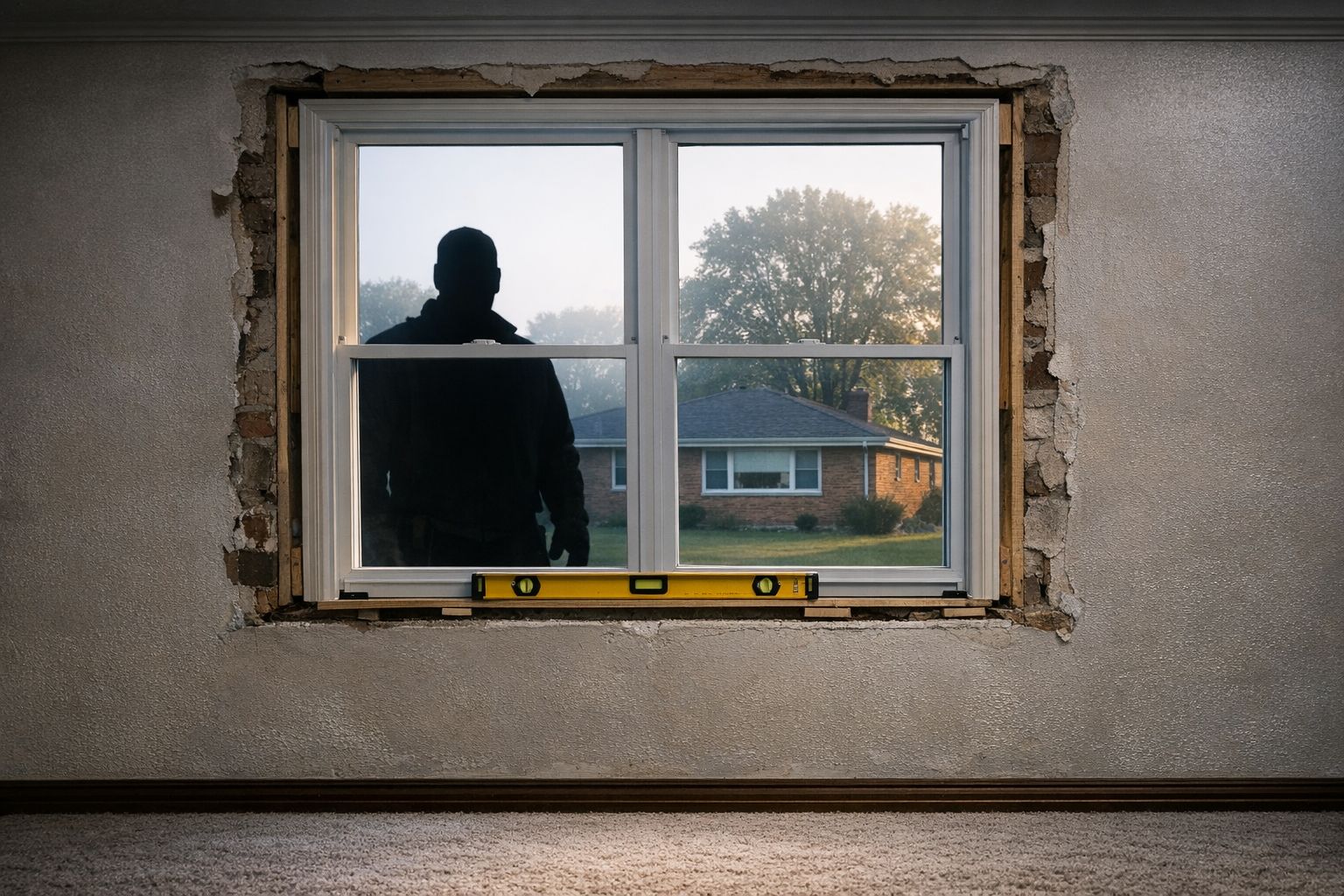
A new unit set, shimmed, and leveled in the opening — serving Hobart and surrounding areas
Window Replacement Services in Hobart
Whole-Home Window Replacement
Every opening measured and replaced as a single project, room by room.
Window Installation
New units set, shimmed, insulated, and sealed one opening at a time.
Double-Hung Windows
Two operating sashes, tilt-in cleaning, and steady ventilation control.
Casement Windows
Side-hinged sash that cranks outward so the full opening clears.
Energy-Efficient Glass Packages
Low-E coatings and argon fills matched to each wall's exposure.
Free In-Home Estimates
An opening-by-opening walkthrough and a written scope, no obligation.
Window Solutions for the Northwest Indiana Climate
Northwest Indiana asks a lot of a window. Long cold stretches arrive with wind coming off Lake Michigan, summers turn humid enough that the difference across the glass shows up as condensation, and the shoulder seasons swing above and below freezing over and over. That repeated freeze-thaw cycling is what works at seals, caulk joints, and the moving parts of a sash, which is why Hobart homeowners tend to feel drafts and find fogged glass in the same rooms season after season. Units for Hobart homes are chosen with that cycle in mind.
Glass packages get matched to the wall they sit on — Low-E coatings to slow radiant heat transfer, multi-pane construction with argon fills between the panes, and warm-edge spacers at the glass edge where condensation tends to start. The point is a window that holds its seal through the cycling, not one that only reads well on a spec sheet.
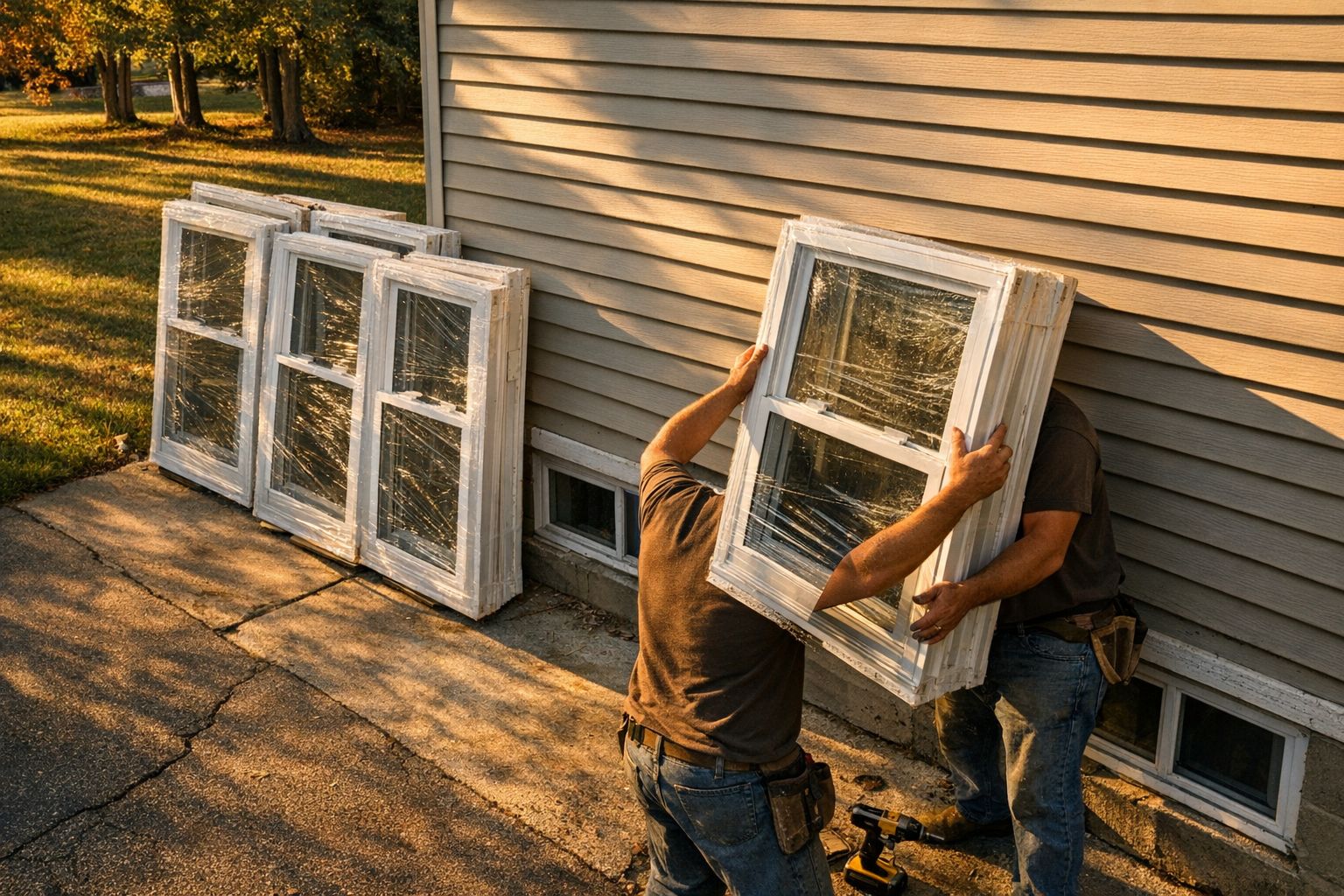
Window Replacement in Hobart, IN
Condensation forms when humid indoor air meets a surface cold enough to pull the moisture out of it. Your glass is almost always the coldest surface in the room, so it collects water first and gets the blame.
Hobart has its own version of this. Lake George sits in the middle of town, held back by the dam at its outlet, and air on the streets nearest the water carries more moisture than air a mile inland. Add a full basement with its own damp load, and the indoor humidity your windows fight starts higher than elsewhere in Lake County.
Whether the window is causing it or your house is causing it is worth sorting out before you spend money. The window is the problem when moisture sits between the panes rather than on the room-side surface, which is a failed insulated unit that ventilation will never clear; when the glass edges frost while the center stays clear, pointing at a conductive metal spacer; or when single-pane glass or an aluminum frame runs cold enough to condense in almost any weather.
Your house is the problem when every window wets up at once, including the newer ones; when bathrooms have no working exhaust, or the kitchen vents into the room instead of outside; or when rooms with the doors shut are worst overnight and the basement smells damp.
Often it is both. An older home near the lake with original double-hung sash and no bath fan has a cold-surface problem and a humidity problem in the same rooms.
Condensation runs down the glass and pools where the sash meets the sill, and wood does not survive that. Paint blisters, the sill checks and softens, and the bottom rail of the sash goes spongy at the joint. In the early-1900s homes near historic Third Street and the downtown district, the plaster below the window shows it too — staining, chalking, then a soft patch under the apron. Left long enough, moisture reaches the framing inside the wall, and a wiped sill becomes carpentry.
The point of window replacement here is a room-side surface warm enough that your indoor air stops condensing on it. What moves that number: warm-edge spacers instead of conductive metal, keeping the glass perimeter — where condensation starts — closer to room temperature; low-conductivity frames and multi-chamber profiles, so the frame itself is not a cold bridge; insulated glass with a low-e coating and an inert gas fill to slow heat loss through the pane; weatherstripping that compresses properly, so cold air is not washing down the glass; and full-perimeter insulation with an interior air seal behind the trim, keeping the wall around the opening warm.
New windows raise your glass temperature. They do not remove moisture from your air. If your home generates more humidity than it can exhaust, better windows move the condensation elsewhere — a wall corner, a closet, the coldest spot in the basement — rather than end it. We will say so when ventilation is the larger half of the problem.
Around the lake and through downtown, original wood sash, brick and vinyl exteriors and full basements are the norm under maple and oak shade. In the newer subdivisions south and east — toward Deep River County Park and the Wood's Historic Grist Mill, past Festival Park and the Oak Savannah Trail — the windows are newer, but sealed units still fail and the same window installation questions come up.
Our shop is in Gary, a short run from Hobart. A visit lets us see where the moisture is collecting, how the house is venting, and which windows need replacing now versus which can wait.
About Hobart
Hobart is a Lake County city built around Lake George, which sits in the middle of town and is held back by the dam at its outlet. Air on the streets nearest the water carries more moisture than air a mile inland, and with full basements adding their own damp load, indoor humidity here starts higher than elsewhere in the county. The older neighborhoods around the lake and through the downtown district — including the early-1900s homes near historic Third Street — have original wood sash, brick and vinyl exteriors, and plaster interiors under mature maple and oak shade. South and east, the newer subdivisions run toward Deep River County Park and the Wood's Historic Grist Mill, past Festival Park and the Oak Savannah Trail; the windows there are newer, but sealed units still fail and the same questions come up.
Window Replacement Cost in Hobart
In Hobart the cost conversation usually starts with how much of the house is in scope, since condensation rarely shows up on every opening equally. Opening count is the first factor, and it is common to do the rooms nearest Lake George or the coldest elevation before the rest. Unit size follows. Specification is where a Hobart project separates from a basic one: warm-edge spacers instead of conductive metal, low-conductivity frames with multi-chamber profiles, a low-e coating with an inert gas fill, and weatherstripping that compresses properly all sit above an entry-level unit, and they are what actually raise the interior glass temperature enough to matter in damp air near the water. Then there is what long-running condensation has already done. Insert replacement into a sound frame is the lighter scope; a checked and softened sill, a spongy sash rail, stained plaster under the apron, or moisture that has reached the rough framing pushes the job toward full-frame work with carpentry attached, and that shift moves an estimate more than any product upgrade. Older homes around the lake and the downtown district also need plaster and original trim protected during removal, which is labor. Access matters on two-story elevations, and finishing a below-grade room to egress brings foundation cutting and a window well into scope. Ventilation work — bath and kitchen exhaust, basement moisture — is separate from the windows, but it is often the other half of the fix.
Frequently Asked Questions — Hobart
Why does moisture form on the inside of my windows, and is the window at fault?
Interior condensation happens when humid air in your rooms meets glass that is colder than the dew point of that air, so the moisture leaves the air and lands on the pane. The window is at fault when its surface is running unnecessarily cold — single-pane glass, a metal spacer at the glass edge, an aluminum frame, or a failed insulated unit that has lost its gas fill. The window is not at fault when the real driver is how much moisture the house is producing, which is common in Hobart homes near Lake George that already sit in humid air and have a full basement adding to the load. A quick test: if only one or two cold windows wet up, look at those windows, but if every window in the house is streaming at once, look at your indoor humidity first.
Will new windows stop condensation problems in my house?
They will reduce condensation on the glass, sometimes dramatically, because a warmer interior surface has to get much more humid before water forms on it. But new windows do not dehumidify your home, and it is important to be straight about that. If your bathrooms and kitchen have no working exhaust to the outside, or your basement is putting moisture into the air, that water still has to go somewhere — and after the windows are upgraded it tends to reappear at the next coldest surface, like an exterior wall corner or a closet on an outside wall. The durable fix is usually both: windows that hold a warmer glass surface, plus real ventilation so the moisture leaves the house instead of moving around inside it.
How does long-term condensation damage sills, sash, and walls?
Water runs down the glass and collects in the joint where the sash bottom rail meets the sill, which is exactly where paint film is thinnest and end grain is exposed. First the paint blisters and lifts, then the wood absorbs and releases moisture repeatedly until the sill checks and the sash joints loosen and go soft. On the older homes near the lake and around the downtown district, the plaster below the window is the next casualty — you see staining, a chalky surface, and eventually a soft area under the apron. If it continues, moisture gets past the trim into the rough framing, and the repair stops being a window job and becomes a wall repair.
What window features raise the interior glass temperature and reduce condensation?
The most important one is the spacer that separates the panes at the glass edge: a warm-edge spacer conducts far less heat than traditional metal, so the perimeter of the glass — where condensation almost always starts — stays closer to room temperature. Next is the frame, where low-conductivity materials and multi-chamber profiles keep the frame from acting as a cold bridge that chills the glass edge and the surrounding trim. A low-e coating with an inert gas fill between the panes slows heat loss through the center of the glass and lifts the whole surface temperature. Finally, good weatherstripping matters more than people expect, because cold air leaking past a loose sash washes down over the glass and drops its temperature locally.
Does living near the water change what windows my home needs?
It changes the humidity your windows have to work against, so it raises the bar on glass temperature. Homes on the streets closest to Lake George and downstream of the dam at the lake's outlet sit in noticeably damper air than homes in the newer subdivisions south and east, and that means glass which performs acceptably a mile inland can still condense here. For those homes we lean harder on warm-edge spacers, low-conductivity frames, and tight sash compression, because every degree of surface temperature buys margin against the moisture already in the air. It is also worth checking basement moisture and bath and kitchen exhaust at the same time, since near the water your house has less help drying out on its own.
Ready for New Windows in Hobart?
Free in-home estimates · No obligation · No pressure
📞 Call (219) 200-4360Free Estimate in Hobart
No obligation · No pressure
Takes 60 seconds · No obligation
📞 Or call: (219) 200-4360Set, shimmed, and checked for level
Nearby Service Areas
Serving Hobart & Surrounding Areas
- Free In-Home Estimates
- No-Obligation Written Quote
- Opening-by-Opening Assessment
- Custom-Measured Units
- Manufacturer Warranty Coverage
- Locally Operated