You can feel it standing three feet away. Cold rolls off the window, the curtain moves when nothing else in the room is moving, and the radiator or vent under it runs and runs without the room catching up.
Cold glass is not the same thing as a draft
Convection off a cold pane
The instinct is to blame the glass. Usually the glass isn't the problem — or at least not the whole problem. In a Northwest Indiana winter, four separate things get described as "a draft," and they have four different fixes ranging from a twenty-minute repair to a new window. Knowing which one you have is the difference between spending appropriately and spending twice. Start here, because this one accounts for a lot of misdiagnosis. Air that touches a cold surface gets cold, gets denser, and falls. Sit next to a single-pane or an aged double-pane window on a hard-freeze night and you'll feel a steady downward current of cold air spilling onto your feet. It feels exactly like air coming in from outside. Nothing is coming in. It's your own room air, chilled by contact with cold glass and dropping. The tell is that this current is downward and steady, strongest right at the glass, and it doesn't change when the wind gusts. Hold a tissue at the glass and it hangs and drifts down; hold it at the sash joints and it doesn't flutter. The fix isn't sealing anything. It's raising the temperature of the interior glass surface — which means better glass: a second or third pane, a low-E coating, a gas fill, and a warm-edge spacer at the perimeter. This is one of the few window complaints that genuinely requires new glass rather than a repair.
The meeting rail — where real air comes in
Testing the joint between the sashes
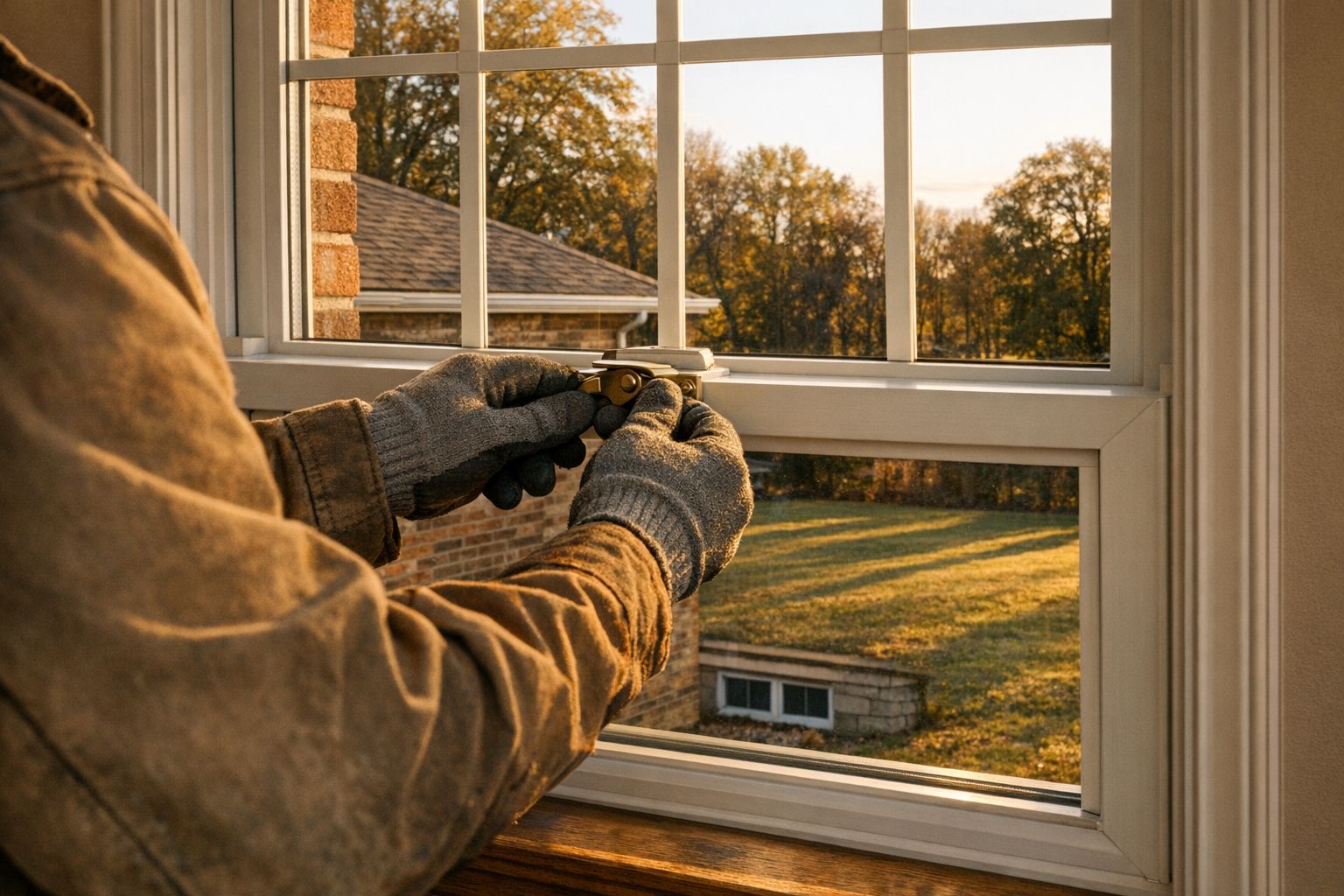
On a double hung window, the horizontal joint where the upper and lower sashes overlap is the classic leak. It's a joint between two moving parts, it's under no compression once the weatherstripping has flattened, and it sits right at chest height where you notice it. Check it with the tissue test on a windy day. If the tissue flutters along that horizontal line, air is moving through. Two common causes: the weatherstrip has compressed or hardened past the point of sealing, or the sash isn't closing all the way because a balance has failed and the lower sash is sitting a quarter inch low. Also check the lock. On most double hungs the lock doesn't just secure the window — it pulls the two sashes into each other and creates the compression that makes the seal work. An unlocked double hung leaks at the meeting rail almost by design. Walk the house and lock every window; it's free and it fixes a surprising number of complaints.
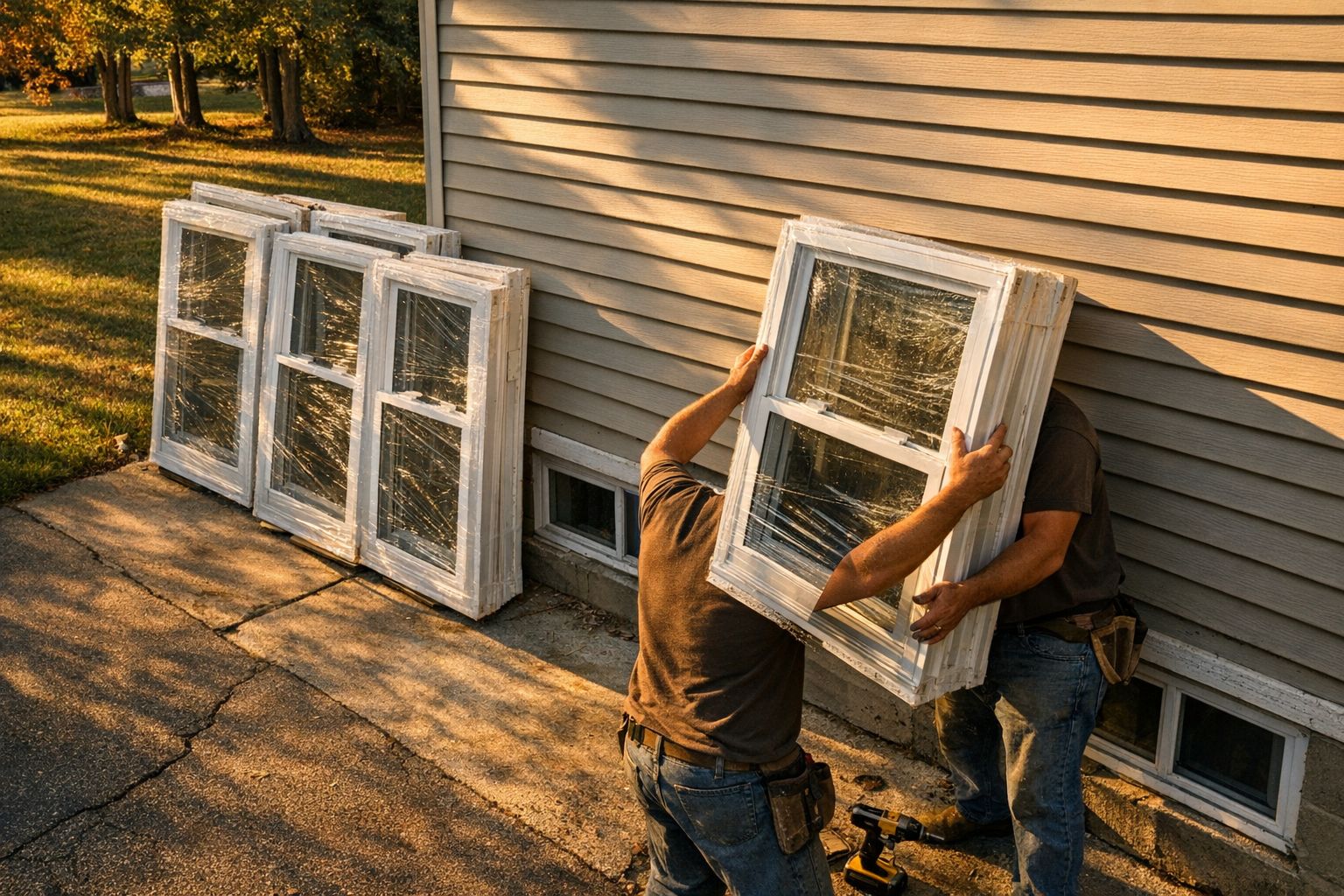
Set and shimmed in the opening — Gary, IN
Behind the trim, not through the window
The leak nobody finds
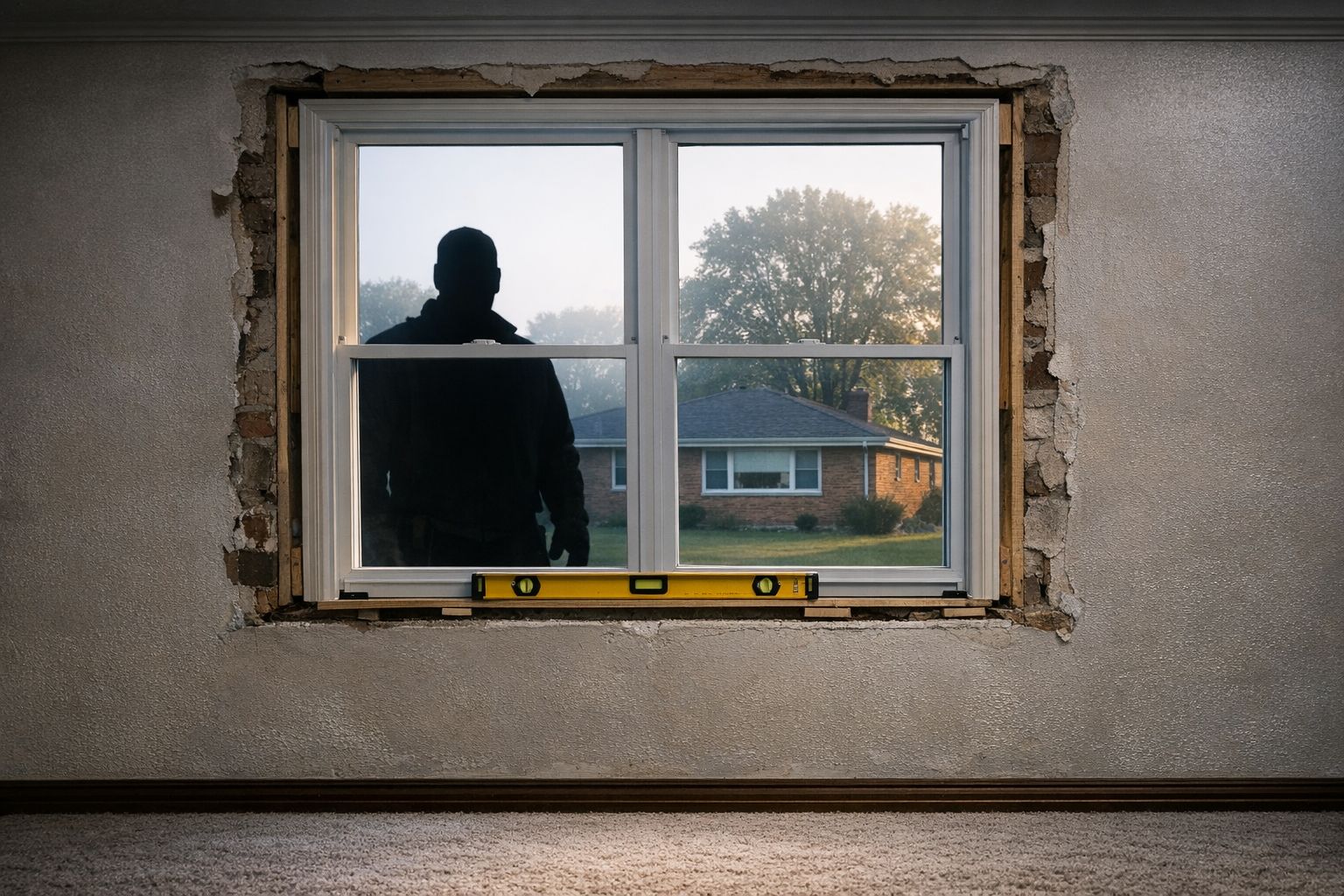
This is the leak people almost never find, because it isn't visible. When a window was installed, the gap between the window frame and the rough opening in the wall should have been insulated and sealed. In older homes, it often was packed with whatever was handy, or with nothing. Decades of settling and freeze-thaw movement open that gap further. The air comes through the wall cavity, travels around the window frame, and emerges at the edge of the interior casing — so you feel it at the window and blame the window. To check, run your hand slowly along the outside edge of the interior trim, where the casing meets the wall, rather than along the sash. If that's where the cold is, the window unit may be fine and the problem is the installation behind it. A full-frame replacement addresses this properly, because it takes everything back to the rough opening and re-seals it. An insert replacement set inside the existing frame does not.
Failed seals and the freeze-thaw problem
What a failed insulated glass unit looks like
Northwest Indiana is hard on insulated glass in a specific way. We don't just get cold — we get repeated crossings of the freeze line, sometimes several in a week, as lake-effect systems move through. Every crossing expands and contracts the sealed unit and works at the sealant around its perimeter. Eventually the seal fails. You'll see it before you feel it: haze or clouding between the panes that won't clean off, because it's condensed on interior surfaces you can't reach. Sometimes a faint mineral film. Once the seal is gone, the gas fill is gone with it, and the unit insulates roughly as well as plain double glazing — which is why a window that felt fine for years can start feeling cold without anything visibly breaking. Sometimes the glass unit alone can be replaced within a sound frame. Often, in a house where several units failed around the same time, the whole window has reached the same age and full whole-house window replacement is the cheaper path across the project.
A twenty-minute walkthrough that tells you most of it
Six checks per window
Do this on a cold, windy day — the wind is what makes real air leaks show themselves. First, lock every window, then re-check the ones that felt worst. Second, run the tissue test at three spots per window: at the glass, along the meeting rail, and along the outer edge of the interior trim, noting which one flutters. Third, look between the panes for haze or clouding that doesn't wipe away. Fourth, operate each sash, because one that sticks, drifts down, or won't seat fully has a hardware problem, and a sash that won't seat can't seal. Fifth, feel the sill: standing water, soft or spongy wood, or peeling paint on the interior sill points to a moisture problem that has been running far longer than one cold season. Sixth, check the exterior joint where the window frame meets the siding or brick, since cracked, shrunken or missing sealant is a repair, and a cheap one. Write down what you find per window. The pattern usually points somewhere obvious — one bad sash on an otherwise sound house is a repair; the same failure on twelve openings is a house that's aged out of its windows.
Repair or replace
When repair is the right answer
Repair is the right answer when the frame and sill are sound and the problem is hardware or weatherstripping: broken balances, flattened weatherstrip, worn locks, a cracked pane, failed exterior sealant. These are real fixes, not stopgaps, and they cost a fraction of a replacement.
When replacement is the better spend
Replacement becomes the better spend when the frame itself is failing, when sills are rotted, when the leak is behind the trim rather than through the window, when seals have failed across most of the house, or when cold glass is the actual complaint — because no amount of sealing raises the temperature of a single pane. The honest version is that most older homes here have some of both, and a good assessment tells you which windows need what instead of quoting the whole house by default.
Get someone to look at it
A second read on what you found
If you've done the walkthrough and want a second read, reach out or request a free in-home estimate. Someone will go opening by opening, tell you which are repairs and which are replacements, and leave you a written number. It takes about 60 seconds to request and there's no obligation attached. Cold windows are one of those problems that quietly gets worse — moisture finds rotted sills, hardware that's failing keeps failing — and one of the easier ones to actually solve.
Ready to Replace Your Windows?
Get a free in-home estimate on your own openings. No obligation, and you get a written scope before any work starts.
📞 Call (219) 200-4360